Choose a specific buying situation
Describe who would buy, for which occasion and how the order would reach them. Gifts for Friday pickup need a different offer from household supplies delivered weekly. Set aside ideas that depend on suppliers or lead times you cannot yet confirm.
Compare ideas with their actual tradeoffs
Stationery is easy to photograph, but shipping can dominate small orders. Personalized gifts need lead times and approval. Cleaning products need suitable packaging and transport. Packaged foods need dates and storage details. Pet accessories need sizes and materials. Crafts need measurements and explanations of differences between pieces. These are examples to evaluate, not verified trends or earnings promises.
Check your supply
Ask about minimum purchases, replenishment, defects and supplier terms. Order a sample when quality matters and take your own pictures. If products are made to order, display preparation time beside each item; do not advertise immediate delivery for merchandise you have not secured.
Calculate the whole order
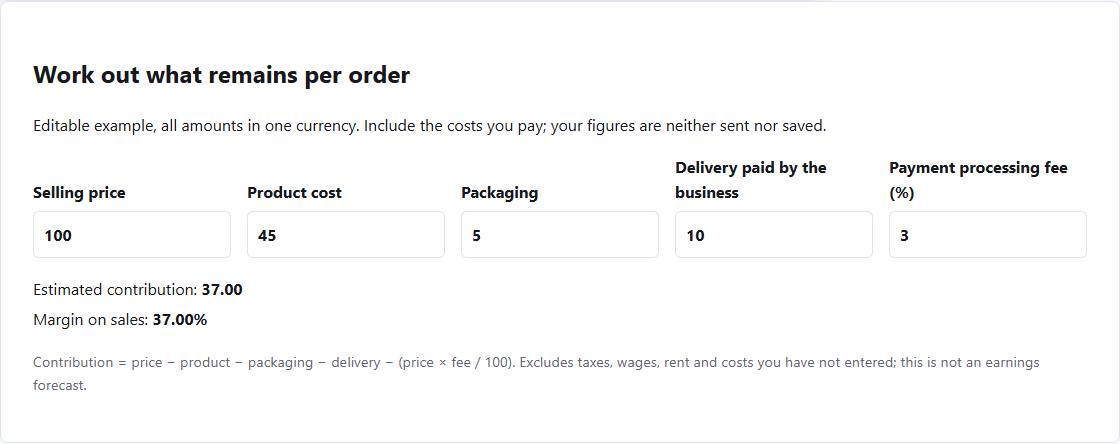
The worksheet compares a selling price with product cost, packaging, delivery and processing fees. The example sells for 100 and leaves 37 before other expenses. Replace the figures with yours. Costs such as your time, rent and taxes are excluded; a positive result does not guarantee profit.
Prepare five listings in MiniTiendAI
Open the free AI creator and describe your products, city and customers. Save the draft and open Products to correct names, prices, pictures and availability. Start with five complete listings. Include materials, dimensions or pack size; remove invented promises and testimonials. Keep the draft private until you can fulfil its terms.
Look for buying signals
Share the published catalog with people who have the need you want to serve. Ask them to find an item and explain what information is missing. A request with quantity, date and service area differs from a design compliment. Confirm through WhatsApp and record the outcome; clicks are not paid sales.
Decide what to keep
Review repeated questions, actual costs, delays and cancellations. Keep items you can source and explain. If nobody requests a product, change one thing at a time: its picture, presentation or audience. Record the date and result. Your catalog should reflect what you learned and the stock you actually have.