Test your offer with an editable draft
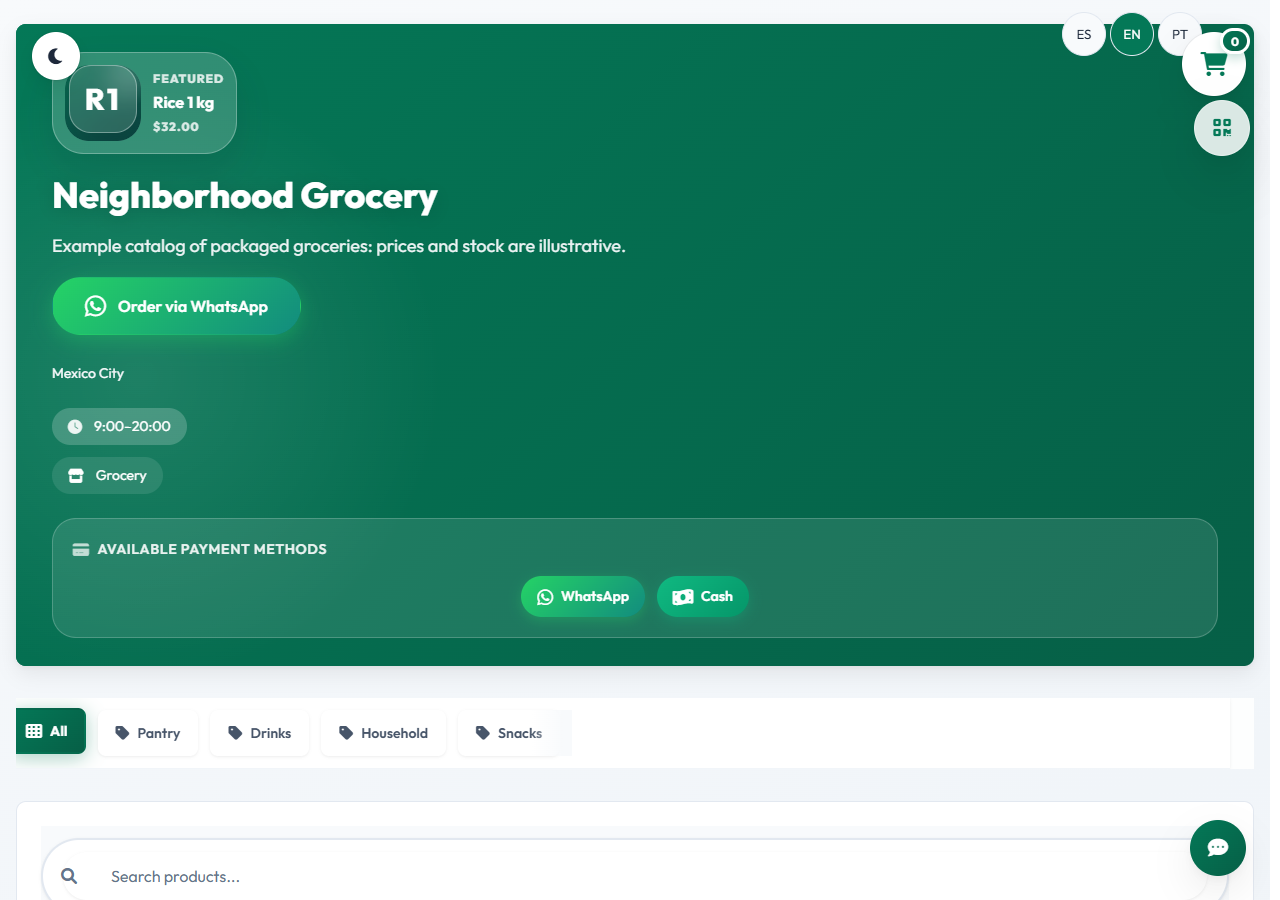
Use StoreCraft AI to turn a specific idea into a catalog draft. For example, describe a made-to-order gift business and identify the items you can actually produce. Review the output and remove any product, testimonial or promise you cannot support. Keep the store as a draft while researching; publish only when prices, lead times and terms are ready. A generated storefront does not validate demand. Evidence comes from conversations, real requests and orders you can fulfil at the costs you calculated.
Start with the problem, not the branding
An idea becomes easier to test when you can explain whose situation it improves. “I want to sell baked goods” names an activity. “I help small offices handle team birthdays with on-time delivery and individually packed portions” identifies a customer, a moment, and a useful outcome. That level of detail gives you real people to interview and a reason for them to care beyond your personal enthusiasm.
Draft one sentence: “I help [specific customer] achieve [result] when [situation] through [offer].” It is a working hypothesis, not a lifelong commitment. If the customer is “everyone,” narrow it. Early on, understanding one small group deeply is more useful than using broad language for several groups that buy for different reasons.
- A customer group you can actually reach
- A recognizable moment that triggers demand
- An outcome the customer already values
- An initial offer you can deliver well
Separate facts from assumptions
Every new venture rests on assumptions: the problem happens often enough, people want a different solution, they will accept your price, and you can fulfill the promise profitably. Assumptions are normal. Trouble begins when they quietly become “facts.” Write them down and label what you know from direct experience, what someone has told you, and what still needs evidence.
- Problem: does it occur frequently enough?
- Customer: can you reach the buyer?
- Offer: is the benefit immediately clear?
- Price: can they pay while you keep a margin?
- Operations: can you fulfill the promise?
Interview potential customers without pitching
Find eight to fifteen people who fit your first customer profile. Look in local communities, professional groups, second-degree contacts, or the audiences of complementary businesses. Say that you are researching the problem and ask for fifteen or twenty minutes. Do not begin with a polished sales presentation. Once people hear your preferred answer, they often become helpful instead of describing what they really do.
Ask about the last time the problem occurred, how they handled it, what it cost in time or money, and what was frustrating. Specific past behavior is stronger evidence than “I would probably buy that.” Capture the phrases they use, the alternatives they already pay for, and the reason the issue remains unresolved. You are looking for patterns, but disagreement is useful too: it may reveal separate segments with different priorities.
- When did this last happen?
- What did you do, and what was difficult?
- What alternative do you use today?
- Who else influences the purchase?
Build the smallest honest version of the offer
Turn what you learned into a limited offer that you can produce and fulfill before building the entire company. A baker might offer two sizes and three flavors for one weekend. A consultant could sell a diagnostic session with a defined deliverable. An accessories shop could launch a focused collection. Fewer options reduce cost, make the message easier to understand, and help you see what actually affects the decision.
- Limited options and defined availability
- Visible price and complete conditions
- One straightforward order path
- Manual but repeatable fulfillment
Test whether the price works on both sides
Positive feedback does not prove that the numbers work. Your price needs to cover the product, packaging, payment costs, transport, waste, customer support, and a reasonable share of your labor. Estimate the variable cost of one order and the monthly costs you will carry even during a slow period. Then calculate roughly how many orders would cover them. You do not need a perfect forecast; you need to expose a model that requires unrealistic volume.
Test a complete value proposition rather than an isolated number. Size, delivery, guarantees, customization, and response time all shape perceived value. If several qualified prospects reject the price, investigate before reaching for a discount. The segment may be wrong, the explanation may hide the strongest benefit, or the offer may include expensive features customers do not value. Cutting price without understanding the cause can increase workload while weakening the business.
- Variable cost for each completed sale
- Fixed expenses for the period
- Production and service time
- Margin for mistakes and reinvestment
Run one small experiment with a clear goal
Choose a channel where your target customers already spend attention and set a short test window, such as two weeks. You might share the catalog with a relevant community, attend a local market, request referrals, or publish a useful answer to the audience’s main question. Use one call to action so the result remains readable: request a quote, book a slot, ask for a sample, or place an order.
- One audience and one primary channel
- One offer and one call to action
- A start date and an end date
- A simple log of conversations and orders
Use the evidence to continue, adjust, or stop
At the end, compare actual behavior with your assumptions. Continue when the need appears repeatedly, some customers pay the proposed price, and you can fulfill without structurally losing money. Adjust when genuine interest exists but the segment, message, format, or channel creates friction. Stop when the problem is rare, buyers do not prioritize it, or the economics work only after leaving out meaningful costs.
None of those decisions is failure. Validation is a way to buy learning with controlled time and money. Document what happened, how your understanding changed, and the next question you will test. Avoid changing the customer, product, price, and channel at the same time; you will not know what caused the result. Run short cycles until you can clearly describe who buys, why, at what price, and how you deliver reliably.
- Evidence supporting the idea
- Signals contradicting the idea
- One change for the next test
- A time or spending limit for the decision