Run a launch check with your actual store
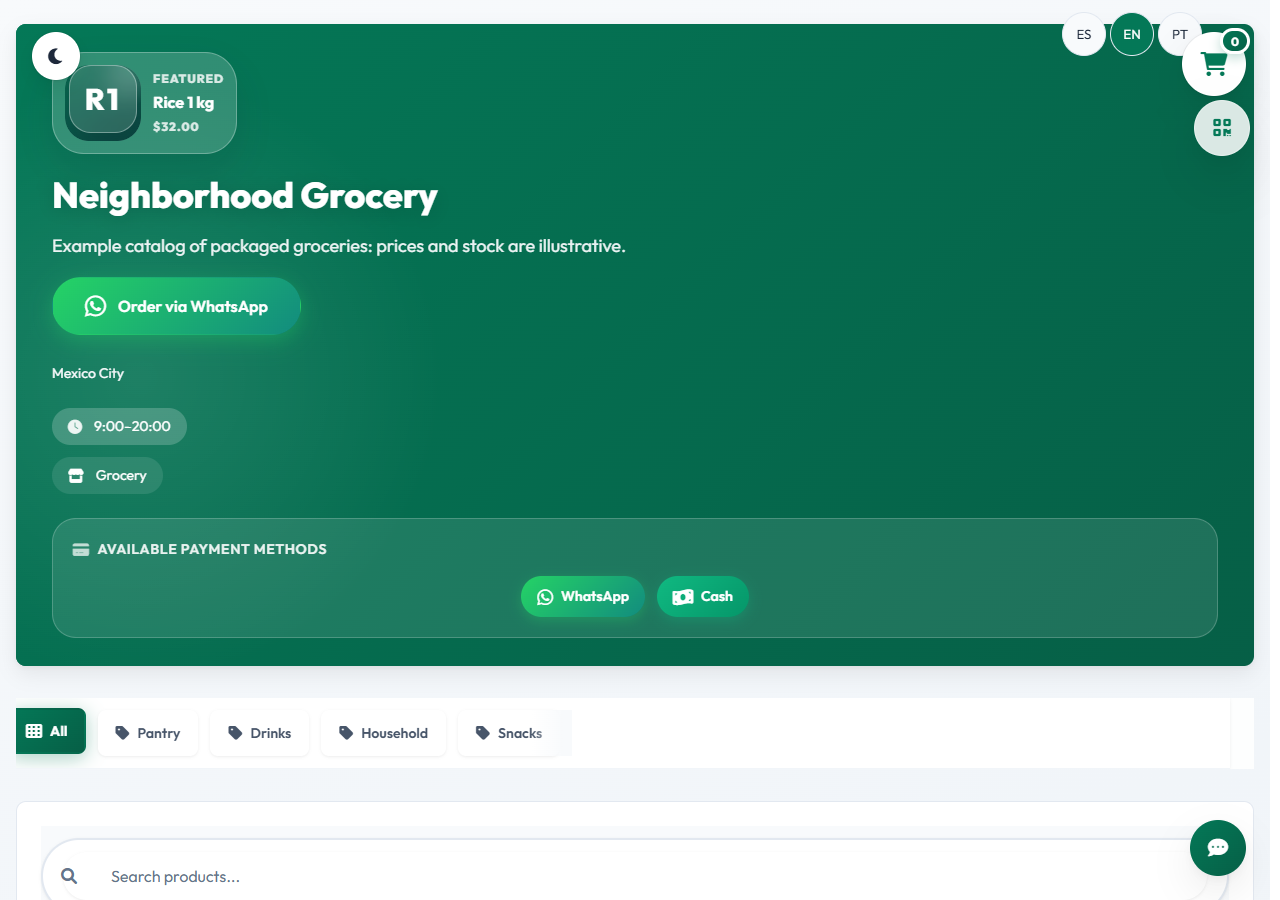
Publish your MiniTiendAI store and copy its link from Publish. Open it while signed out, review prices and availability, fill a cart and confirm that WhatsApp points to your business. Share first with someone who can give specific feedback about the shopping experience. Then review Orders and Customers in the dashboard and record the actual outcome of the conversation. A WhatsApp click does not prove a paid sale: evaluate the launch using the order status and your payment confirmation.
Before you promote: define what a useful first sale means
Opening a store does not create demand on its own. Early sales usually follow conversations, tests, and adjustments: someone understands the offer, trusts the business enough, and finds an easy way to buy. No tactic can guarantee results, but small actions that produce real information can reduce uncertainty.
For the first few weeks, look for something more valuable than a large visitor count. Learn who responds, which product earns attention, what objection stops a purchase, and which channel makes contact easier. Set a process target—such as holding twenty relevant conversations and completing ten test orders—alongside a revenue target. That way, you can learn even when a sale takes longer than expected.
1. Choose a specific customer and 2. shape an offer that is easy to explain
Describe the first person you want to serve by their situation, not only by age or gender. “People who need a local gift delivered tomorrow” provides more direction than “adults aged 25 to 45.” A specific need helps you choose products, photography, messages, and channels without trying to appeal to everyone.
Then turn the product into an offer you can explain in one sentence: what the customer receives, what it helps them do, how much it costs, and how they get it. Start with a small selection you can fulfill reliably. If there are too many options, create a starter bundle or feature one main product. Clarity makes buying easier and simplifies inventory, preparation, and support.
3. Feature one lead product and 4. publish a store that earns trust
A lead product gives people a clear place to start. Choose it based on observable demand, workable margin, availability, and delivery effort—not personal preference alone. Present it with a direct name, accurate photos, a complete price, and a description that answers what is included, who it suits, and why it may be useful compared with other choices.
Trust also comes from operational details. Publish an active contact method, response hours, delivery areas, accepted payment methods, and basic change or cancellation terms. Do not invent reviews, sales counters, or permanent discounts. If the business is new, say so calmly and make up for the short history with precise information, timely responses, and a transparent process.
5. Complete a mobile order before inviting traffic
Walk through the experience as a customer: open the link on a mobile network, find the item, choose an option, add it to the cart, and send the request. Confirm that names, quantities, notes, and totals arrive in a readable format. Test what happens with a sold-out item, an address outside your delivery area, and a message sent after service hours.
Ask two people to run the same test without instructions. Watch where they hesitate and listen to how they describe the issue; do not defend the interface. Fix purchase blockers first, such as a hidden button or ambiguous price, then address minor improvements. Sending visitors into a broken flow wastes attention and makes it hard to know whether the offer or the experience failed.
6. Speak with your existing network and 7. join relevant communities
Your existing network can provide the first conversations, but it should not become a list for spam. Contact people individually when the offer genuinely fits their needs. Explain that you are starting, share why you thought of them, and make it easy to decline. Ask what feels clear or confusing even if they do not buy.
Look for communities connected to the need as well: neighborhood groups, local markets, associations, events, or focused discussions. Read the rules before posting and contribute useful information. Instead of dropping a link without context, answer a question, show your process, or share specific availability. The goal is to be relevant, not to appear in every group you can find.
8. Create content that answers questions and 9. ask for authentic feedback
Early content does not need expensive production. Show how to choose an option, care for the product, understand a bundle, or see an order being prepared. Every piece should answer a question you have actually heard. End with a reasonable next step: check availability, browse the catalog, or submit a request. Rotate demonstrations, frequently asked questions, and use cases instead of repeating discounts.
After a successful delivery, ask whether the customer would like to share feedback. Get permission before publishing their name, photo, or message, and welcome a short response. Do not alter the meaning of a review or offer a reward that depends on it being positive. You can also ask for a specific referral: “Do you know someone who needs a gift this week?” is easier to answer than a vague request.
10. Follow up respectfully and measure the full journey
Someone can show interest and become distracted without rejecting the offer. If they left a conversation open, send one short follow-up that adds value: confirm availability, answer the pending question, or share a genuine delivery deadline. A second contact may be reasonable; a persistent sequence damages trust. Give the person an easy way to close the conversation without pressure.
Keep a simple record of visits, qualified conversations, requests, confirmed orders, sales value, cancellations, and response time. Metrics should point to the next adjustment. Many visits with no conversations may signal an unclear offer; conversations without orders can indicate price, trust, or delivery concerns; canceled orders expose an operational promise worth reviewing.
Repeat the cycle each week: keep the channel that creates relevant conversations, improve the answer to the most common question, and remove one ordering obstacle. Early sales do not prove that the business will scale, but they provide evidence for deciding what to keep, what to change, and where to invest the next effort.